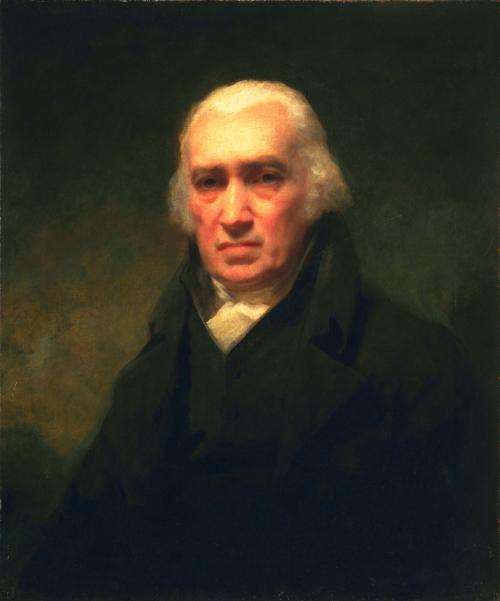
James Watt

British, 1736 - 1819
BiographyJames Watt, an engineer and inventor, was born at Greenock, Scotland, on January 19, 1736, a son of Agnes (Muirhead) (1703-55) and James Watt (1698-1782). His father was a successful merchant, craftsman, and builder, and his grandfather had been a teacher of mathematics, surveying, and navigation. In 1753 Watt embarked on a career as a maker of mathematical, or "philosophical," instruments (such as quadrants, compasses, and scales). Although Watt's mechanical inventions and contributions to science were multifarious, it is for his development of a steam engine that he is best known. In 1757 he began a series of experiments in the application of steam at the University of Glasgow. Eighteen months later he moved to Birmingham, England, and commenced a twenty-five-year partnership with the manufacturer and engineer Matthew Boulton (1728-1809), whose financial support enabled Watt to make rapid progress with his ideas for an engine in which heat would be efficiently converted into mechanical energy by preventing steam from dissipating into the air. Watt's engine was essentially complete by 1790, and was rapidly introduced to mills, distilleries, canals, and waterworks. In 1794 he established the firm of Boulton & Watt to manufacture steam engines more competitively. A member of Birmingham's Lunar Society, Watt was interested in alliances of art and science. Earlier in his career he had invented machines for writing in duplicate and for drawing from nature in proper perspective. After retiring from business in 1800, he returned to such art-related inventions, producing, for example, a machine for copying sculpture. The patents on Watt's various engines and other machinery brought him wealth and honors, including the offer of a baronetcy, which he declined. He died at his home, Heathfield Hall, near Birmingham, on August 25, 1819 at the age of eighty-three, and was buried beside Matthew Boulton in St. Mary's Church, Handsworth.
Person TypeIndividual
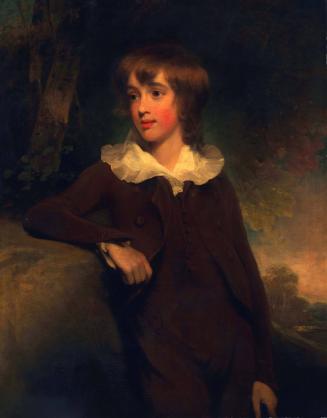
Mordaunt Ricketts
British, 1786 - 1862
Alternative Names: Mordaunt Ricketts
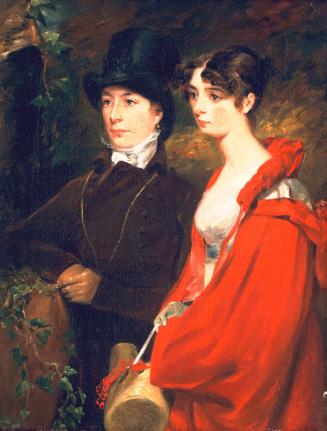
Ann Constable
British, 1768 - 1854
Alternative Names: Ann Constable
Mary Constable
British, 1781 - 1862
Alternative Names: Mary Constable
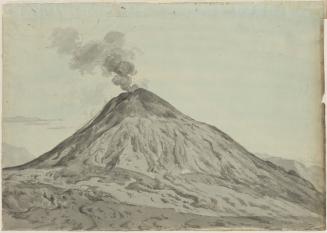
Joseph Wright of Derby
British, 1734-1797
Alternative Names: Joseph Wright of Derby
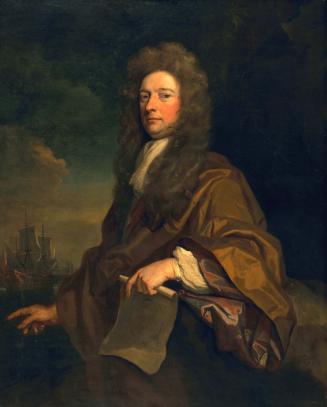
William Robinson, later Sir William Robinson Knt.
British, 1643 - 1712
Alternative Names: William Robinson, later Sir William Robinson Knt.
Photography © 2014 Fredrik Nilsen
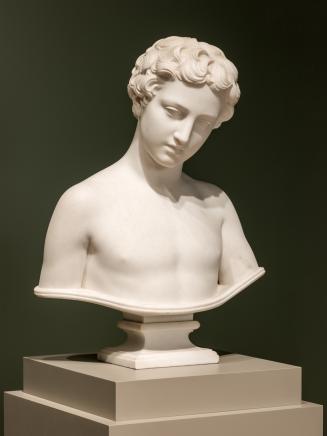
American, 1805 - 1873
Alternative Names: Hiram Powers
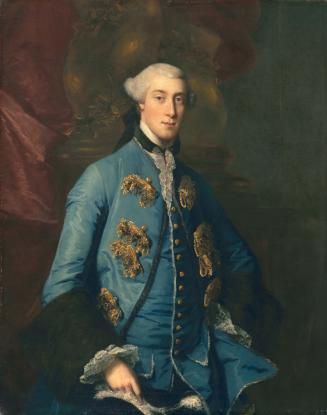
Francis Hastings, Earl of Huntingdon
British, 1728 - 1789
Alternative Names: Francis Hastings, Earl of Huntingdon
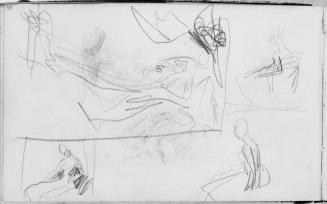
George Romney
British, 1734-1802
Alternative Names: George Romney
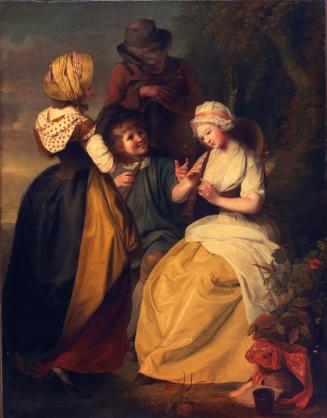
Matthew William Peters
British, 1742-1814
Alternative Names: Matthew William Peters
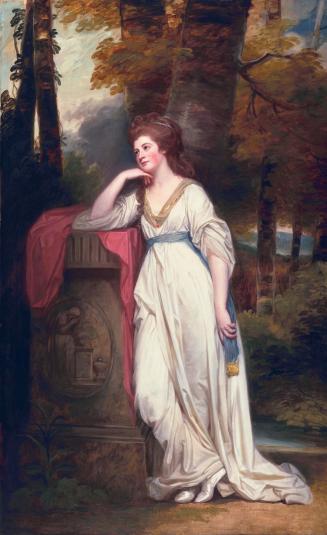
Mary (Palmer), Lady Beauchamp-Proctor
British, 1760 - 1848
Alternative Names: Mary (Palmer), Lady Beauchamp-Proctor
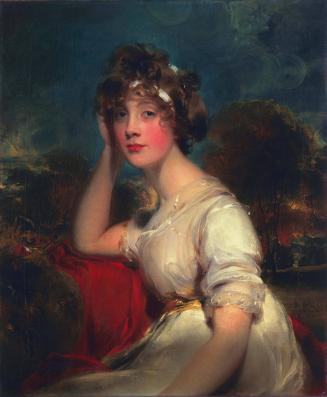
Lady Jane (Maitland) Long
British, died 1833
Alternative Names: Lady Jane (Maitland) Long