
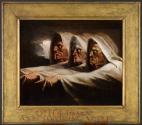
The Three Witches
Maker
Henry Fuseli
(Swiss, active England, 1741 - 1825)
Additional Title(s)
- Weird Sisters
ClassificationsPAINTINGS
Dateca. 1785
Mediumoil on canvas
Dimensions24 3/4 x 30 1/4 in. (62.9 x 76.8 cm.)
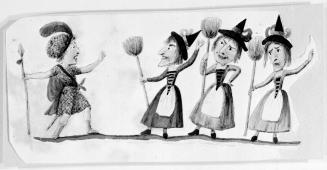
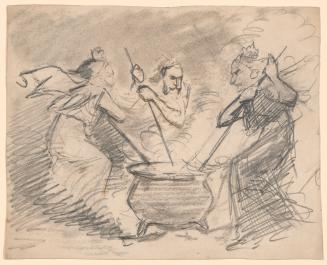
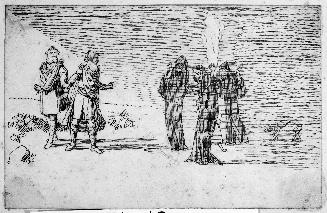
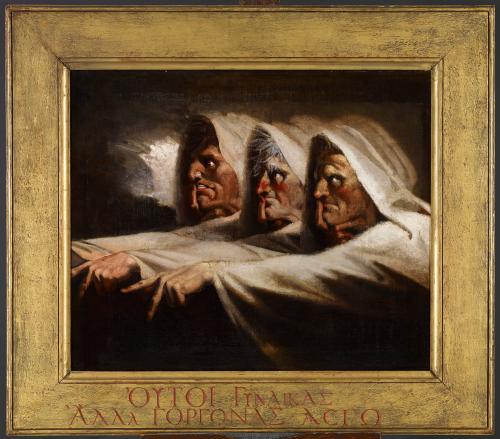
DescriptionThis is a finished, full-size study for one of Fuseli's best known compositions. The painting depicts the pivotal moment in Shakespeare's tragedy Macbeth (Act I, Scene 3) when the protagonist encounters a trio of witches who foretell his fate.
InscribedNot women, but gorgons I call them
Credit LineThe Huntington Library, Art Museum, and Botanical Gardens. Purchased with funds from The George R. and Patricia Geary Johnson British Art Acquisition Fund
Status
On viewpainting illustrates the crucial moment in Act I, Scene III of Shakespeare’s tragedy when the witches appear to Banquo and Macbeth, prophesying that Macbeth will become king of Scotland. This prediction fuels Macbeth’s ruthless ambition, and he soon murders the
king to seize the throne. Fuseli gives the witches exaggeratedly wrinkled faces, highlighted with blotches of red and grey. The image of the witch as a grotesque caricature of an old woman, entrenched in the European imagination since the 15th and 16th centuries, was inspired by ageist and sexist medieval ideas about the sinister nature of elderly women.
The frame is inscribed with a quote from the ancient Greek playwright Aeschylus: “Not
women, but Gorgons I call them,” a reference to the three monstrous sisters, Stheno, Euryale, and Medusa. As the Gorgons’ terrifying appearance turned those who gazed upon them to stone, the inscription further reinforces the monstrousness of Macbeth’s witches.
Object number2014.15